As of 2019, 33 U.S. states and Washington, D.C. have legalized medical marijuana, thus recognizing the plant’s potential to help people who are sick or experiencing pain. But in some cases, cannabis might not just be an additional option for treatment: It could be the safer alternative.
That is particularly valid in contrast with narcotic painkillers like OxyContin and Vicodin. As the nation keeps on pondering an across the nationwide opioid epidemic , numerous therapeutic specialists have turned out to be progressively careful about recommending the incredible medications. “Narcotics can be perilous. They’re physically and synthetically irresistible,” says Oliver Park, MD,a cannabis-accommodating specialist in New York. “We’re amidst a phenomenal narcotic emergency; many individuals are kicking the bucket.”
There’s no uncertainty that cannabis is more secure as an option in contrast to exceptionally addictive painkillers, Dr. Park says. Endorsing cannabis is one piece of a multifaceted exertion by government authorities, medicinal specialists, and open strategy supporters to address the narcotic emergency, he says. Without a doubt, cannabis likely won’t supplant over-the-counter choices at any point in the near future—basic calming medications like ibuprofen and acetaminophen, which treat regular ailments like migraines and fevers, aren’t concerning enough to require an option. Narcotics, in the interim, are endorsed for individuals who have interminable torment, or who are recuperating from genuine damage or medical procedure, Dr. Park says. You may almost certainly get a cannabis remedy for endless headaches, for instance, yet not really for the incidental migraine.
But then, ceaseless torment wasn’t acknowledged as a passing condition for therapeutic pot in New York until March 2017. Presently, Dr. Park says that practically the majority of the 33 states that have sanctioned medicinal pot acknowledge torment as motivation to endorse cannabis. In New York, that implies anybody encountering incessant torment for at least three months—torment that makes them lose center at work or generally upsets their lives—can go to a specialist and get a remedy for cannabis. “I would state most of my patients are having interminable agony issues,” Dr. Park says. “That is without a doubt the most well-known motivation to get qualified.”
Since the therapeutic program is still moderately new in numerous states, Dr. Park says that only one out of every odd general consideration professional realizes how to endorse the plant. Along these lines, your normal specialist may allude you to a pot amicable specialist like him. In the eighteen months that he’s been proposing patients use cannabis, Dr. Park has figured out how to control them toward the best sorts and doses.
Some dispensaries carry specific strains of the plant, he says. But in New York, for example, medical marijuana dispensaries don’t carry smokable cannabis, because smokingmarijuana is still illegal in the state. Instead, New York dispensaries offer patients tinctures, vapes, and pills, and since each format is derived from cannabis plants’ extracts, the dispensaries have a lot of control over how much THC and CBD are in each dose. (Note that regulations for medicinal usage varies state by state.)
Generally, Dr. Park says there are three sorts of dosing: High THC and low CBD, equivalent measures of both THC and CBD, and low THC with high CBD. Dr. Park may propose a patient utilize various measurements or mixes at various occasions of the day. Somebody who needs to center at work, for instance, would capitalize on a high CBD and low THC blend during the day, that way they can work at work with insignificant psychoactive impacts from the THC, however will even now encounter cannabis’ recuperating advantages because of the CBD.
Regardless, the mix of THC and CBD can more viably treat torment than either compound alone, Dr. Park says. “THC covers the torment and CBD is calming, so it treats torment at the site,” he says. While there might be numerous absolutely lawful, solution free CBD choices available to be purchased now, and they may even help now and again, endless agony will consistently be better treated with a blend of THC and CBD.
In this way, in case you’re thinking about cannabis to treat treatment, the initial step is to see a specialist who has experience working with cannabis, and who will probably enable you to make sense of how to best way to deal with treating your torment. “cannabis use is an extremely close to home thing,” Dr. Park says. “It requires some investment to discover a routine that works.” Talk to your PCP and converse with the experts at your neighborhood, cannabis dispensary and before you know it, you will have a starting point for managing pain with cannabis.
While cannabis may seem like a miracle drug that can treat a myriad of health conditions from migraines to cancer, the plant can’t be used to treat everything. So, you may be asking whether or not cannabis is an option for you. If you live in one of the 33 states that have legalized medical marijuana, you’re able to ask your doctor about using it. And if you have Crohn’s disease, the answer to whether cannabis may help will almost certainly be yes.
Although each state has different qualifying conditions, most of the states that allow medical marijuana consider Crohn’s disease an acceptable reason to have a prescription. Even some states that haven’t explicitly listed Crohn’s as a qualifying condition may allow Crohn’s patients to use cannabis as part of their treatment plan, because Crohn’s often causes the kind of chronic nausea and pain that constitutes a qualifying condition.
Chron’s disease medication
If your state allows medical marijuana for Crohn’s disease, the first step is talking to your gastroenterologist. While it may feel strange talking to a doctor about marijuana, many are open to your using it as part of a larger plan to combat the condition. Alyssa Parian, MD, a gastroenterologist at Johns Hopkins Bayview Medical Center, says that roughly half of her patients ask about using marijuana. “I’m not opposed to them using it,” she says. In some cases, marijuana may be better than the narcotics her patients would otherwise use to treat chronic pain caused by Crohn’s disease, she says. But she does tell her patients that, like anything else in life, marijuana should be used in moderation. “Nothing is without side effects,” Parian says.
That said, she knows (and scientific studies have proven) that cannabis can be helpful for treating some symptoms of Crohn’s disease, specifically pain, nausea, and lack of appetite. And some of her patients also say it helps with their diarrhea, at least slightly.
But the biggest question right now is whether medical marijuana simply treats the symptoms of Crohn’s disease (acting like a kind of Band-Aid), or if it actually helps to treat the root cause of the disease: inflammation in the bowels. “There are studies right now looking at whether it actually helps the inflammation or not,” Dr. Parian says. “We’re waiting for some real, ongoing studies to publish [that] data.”
Until the research results are available, she can’t recommend that patients tamp down any of their traditional medications (except possibly reducing usage of narcotic painkillers) to add marijuana to the mix. “What I tell my patients right now, is that I’m not opposed to them using [cannabis], but I’d prefer they don’t use it every day, and instead use it [to manage] their symptoms as needed,” she says.
She also warns her patients of the consequences. In one study of patients with inflammatory bowel diseases, frequent cannabis use was associated with an increased risk of surgery. “What we think is happening is that patients are using it and masking their symptoms, or they’re using more and more of it and not seeing their doctor,” Parian says. Then, these patients aren’t feeling that their Crohn’s symptoms are getting worse, and are not getting the medical attention they need.
Crohn’s disease pain
Because of issues like this, Parian urges her patients who ask about medical marijuana not to stop their medical therapy or view the plant as a full-fledged replacement, but to use cannabis as a supplemental medication. And if you keep experiencing pain and vomiting, make sure to talk to your doctors rather than take more cannabis to mask the pain.
Then, once they’ve gone through these conversations and the patient is still interested in trying medical marijuana, Parian has to hand them off: At the hospital where she works, she’s not allowed to issue medical marijuana cards, so her next step is a referral to a doctor who can write them that prescription—a doctor like Oliver Park, MD, a medical marijuana doctor who practices in Brooklyn, NY.
Park sees many patients who have all kinds of conditions, and he counsels them on using marijuana as part of their treatment plan. During the first visit, he typically reviews the patient’s medical history and does a physical exam, if necessary. Then, he and the patient will sit down for a chat about how medical marijuana could help them, and how to get started. “For Crohn’s disease and other inflammatory bowel conditions (such as Ulcerative Colitis), I do recommend that the patient start with a good balance of THC and CBD,” he says.
Medical marijuana dispensaries don’t always give out the whole plant—neither smokable nor edible versions are allowed in New York, for instance. Instead, Park suggests opting for something like a tincture, which people can use by dropping small amounts of CBD or THC oil into their mouths. It’s much easier to control how much you’re using that way, Parian says, and you’re less likely that you’ll harm your lungs than if you were to smoke the plant.
Park suggests beginning with small amounts. He recommends a one-to-one ratio to start, usually about five to 10 milligrams total (THC and CBD combined). Then, you can slowly try larger amounts of either THC or CBD to see what works best for your symptoms.
CBD for Crohn’s disease
Crohn’s patients will likely always find it helpful to use both CBD and THC. “The gastrointestinal system contains a vast quantity of receptors that are acted upon by THC and CBD,” Park says, noting that both cannabinoids have been shown scientifically to help decrease Crohn’s symptoms. Parian says her patients usually find that a high CBD, low THC mix works best for them. That said, each person will respond to a different ratio and a different dose, so you may mind that your ratio is slightly different.
Ultimately, you can’t truly start to figure out what’s best for you until you reach out to your doctor. So bite the bullet and make an appointment—once you get the conversation going, you’ll be on your way to getting a medical marijuana card and soothing your symptoms.
There’s been lots of talk (and increasing evidence to support it) about how cannabis can be a helpful tool in treating anxiety, depending on the dosage and timing. But CBD, the non-psychoactive cannabinoid compound found within cannabis itself, is also getting quite the reputation for soothing anxiousness. From gummies to oils, plenty of CBD-based products claim to be a solution for your nerves. But is CBDreallythe anxiety panacea that it seems to be?
Using CBD for Treating Anxiety
Michele Ross, Ph.D., a neuroscientist based in Los Angeles, says that we know there are components of CBD that theoretically give it a relaxing quality that can aid in quelling anxiety. The scientific research on CBD’s effects still needs more work, but Dr. Ross says CBD is thought to bind to serotonin, a neurotransmitter in the brain that impacts mood and anxiety. CBD, she explains, binds to a serotonin receptor called the 5-HT1A and activates that receptor in order to add to the availability of serotonin in the brain to make you feel good—and not nervous or panicky. Plus, she says, there’s some evidence to suggest that CBD also works by activating GABA-A receptors, chemical messengers which are thought to have a calming, relaxing effect on the brain. “Physiologically, we know that CBD should work [for anxiety], we just haven’t really seen this play out in terms of clinical trials,” Dr. Ross says.
According to a 2019 study published in the journal Pain, CBD’s effects on 5-HT1A transmission in rats helped to lessen “anxiety-like behavior.” As far as humans go, a 2015 analysis that reviewed 49 existing studies found that CBD could be a way to reduce anxiety, panic disorder, and maybe even post-traumatic stress. And a 2011 study looking at people with public speaking anxiety and found that CBD could soothe their fears. The problem with that study, however, is that the participants were given 600-milligram doses of CBD, which Dr. Ross says isn’t as likely to happen for the average person who buys CBD gummies hoping to aid their anxiety.
“Studies of humans looking at the effects of CBD have rarely been all that great,” she says. “So there is clinical evidence that really high doses of CBD help reduce specific forms of anxiety, like social anxiety, but those aren’t the kind of products that are on the market—no one’s taking really 600 milligrams of CBD at a time, that could be a really excessive pill.” Instead, you’re more likely to find products that typically have lower doses, like 150 milligrams of CBD. “The reason why some of these studies that have looked at CBD have used such high dosages is that they’re just using CBD by itself, and they have to use a high amount for it to be absorbed by the body,” Dr. Ross says. “So it’s sort of hard to extrapolate from a study with 600 milligrams by itself to being like, ‘am I going to take a 5 milligram gummy and have it make me feel good?’
”So, in that sense, the evidence that we have is more anecdotal than anything when you buy, say, a CBD latte at a cafe, the CBD content has likely been diluted, and any effects of the compound will, therefore, be reduced. “No one has really tested these kinds of things, such as whether CBD helps with anxiety if you’re just taking 5-10 milligrams of a CBD tincture that’s [added] with some other terpenes that make it more available for sale,” Dr. Ross says.Not to mention, anxiety is extremely complex. According to the Anxiety and Depression Association of America, anxiety disorders are the most common mental health issue in the U.S., affecting 40 million adults.
Not only are there different forms of anxiety, like social anxiety, panic disorder, and generalized anxiety, people can experience anxiety in different ways. Even if CBD was clinically proven to relieve anxiety, it may not be an effective treatment for everyone.
Regardless, if you’re experiencing a major anxiety disorder, CBD shouldn’t be the only treatment you’re turning to — talk to a doctor who can advise you on taking medication, or seeing a therapist.
That said, if you’re interested in experimenting with CBD along with other anxiety treatments, Dr. Ross recommends getting products that come from a dispensary, because they’re more likely to have been lab-tested. She also advises starting with a lower dose, which can help you figure out how much CBD works for you. But in the end, she says, managing anxiety is a bit like managing chronic pain: You have to manage your expectations over a long period of time and remember that treatment is a marathon, not a race.
One of the best activities you can plan during the warm summer months is undoubtedly camping, whether it’s an epic trip with a group of buddies or a romantic weekend with a significant other. The weather’s nice, it stays light out much longer, and, most importantly, you get to be outside nonstop, taking in all that Mother Nature has to offer. While it’s important to make sure you’ve got all the necessary gear accumulated and packed up for a weekend in the woods, you’ll also want to make sure you’ve got the right cannabis strain on the hand. Whether hiking is on the agenda or you’re planning on spending the entire time chilling out in a tranquil setting, you’ll need the proper weed handy at all times. To make the most out of your great outdoor adventure, check out these camping-friendly strains at your nearest cannabis dispensary.
Green Crack If your trip involves hours of hiking, foraging, or something even more physically-demanding, like kayaking or river rafting, you’re going to need a strain that keeps you energized. Look for a tried-and-true sativa strain like Green Crack that will keep you motivated during all of your activities.
Chemdawg 91 If you’re in charge of cooking, you’ll want something to put you in an ideal mood to socialize, while also motivating you to gas up the grill or start the campfire. Try the sativa-leaning hybrid Chemdawg 91 for a euphoric high that will bring you just enough energy for a stellar (and delicious!) evening cookout.
Blueberry Muffins More often than not, the whole point of a camping trip is just to relax, and you don’t necessarily need to go hiking through the woods to enjoy being surrounded by nature. Sitting on a campground and enjoying a stunning, candy-colored sunset can make you appreciate the earth’s beauty just as much. A strain like Blueberry Muffins is perfect for extremely chill activities.
Lavender One of the best things about camping is that you’re allowed—in fact, you’re encouraged—to embrace the munchies monster within. As you’re packing up all of the snacks (and s’mores ingredients) you’re going to need, don’t forget to throw in an appetite-inducing strain like Lavender.
Girl Scout Cookies Time to star-gaze. Want a strain that will be the perfect companion to tripping out on the night sky while having a long, deep conversation with your camping buddies? Make sure to have some Girl Scout Cookies on hand.
Grandaddy Purple Let’s be real: It’s a little tough being so far away from the comfort of your Casper mattress. Some nights you need more than just a sleeping bag or inflatable mattress between you and the ground. If you require a little assistance catching zzz’s, why not turn to a potent indica strain? Grandaddy Purple will help you melt away while getting you a good night’s sleep.
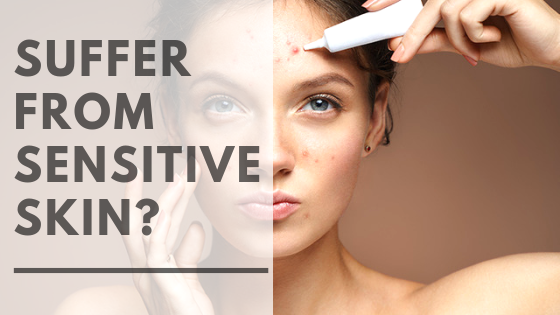
More often than not, a beauty routine requires a lot of trial and error before it can reach perfection, and that’s especially true when it comes to skincare. Trying to find the most effective cleansers, serums, and moisturizers can be akin to searching for buried treasure. And for those with particularly sensitive skin, finding the right products at your nearest cannabis dispensary. That’s where CBD can—and should!—step in.
Using CBD for Effective Skin Care
Sensitive skin is essentially a blanket term for all sorts of skin conditions, including rosacea, eczema, contact dermatitis, acne, and dryness. Since cannabidiol—commonly referred to as CBD—is known to alleviate inflammation (which comes to life via rashes, redness, and irritation), it can be a beneficial ingredient for sensitive skin types. Studies have also shown CBD to regulate sebum production, which is good news for dry skin-sufferers, who produce less sebum than people who don’t have any problems with dry skin.
But is topical CBD the best solution for sensitive skin, or is there another format that’s more effective? “Topical is definitely the best, but everything you take internally is reflected relatively quickly in the skin,” says Dr. Jeanette Jacknin, M.D., a board-certified dermatologist in San Diego. So, based on that, using a topical ointment alongside a capsule or tincture certainly wouldn’t hurt. Dr. Jacknin is also a proponent of full-spectrum CBD, due to the possibility of added benefits through synergistic combination. “Full spectrum doesn’t mean it has THC; it just means it has the other cannabinoids and terpenes. People refer to what’s known as the Entourage Effect, where one [cannabinoid or terpene] helps the other,” she says. “So, I personally prefer full-spectrum.”
There are, of course, plenty of dermatologist-recommended skincare products for sensitive skin readily available. If you already have a go-to moisturizer or some other topical and are curious about bringing CBD into the loop, it’s certainly worth some experimentation. As for application tips, Dr. Jacknin suggests adding one drop of CBD oil to your regular formula and applying it to your hand, that way you can see how your skin will respond before applying it in more visible areas, like your face. “I wouldn’t start with more than 5 mL,” she advises. “Start small, with one drop, and then you can add another, and another,” she says. Slow and steady wins the race.
Ultimately, Dr. Jacknin says to always pay attention to how your skin reacts to any ingredient, and to also keep in mind that just because something is “natural,” it doesn’t mean that you’re entirely safe. “Make sure you’re not sensitive to whatever the carrier [oil] is for the CBD you select, whether it’s emu oil, coconut oil, or something else. A lot of people are sensitive to natural essential oils or herbs,” Dr. Jacknin explains. The main takeaway when it comes to CBD’s potential as a savior for sensitive skin: “Everybody is different,” she says. “You may react differently than somebody else.”
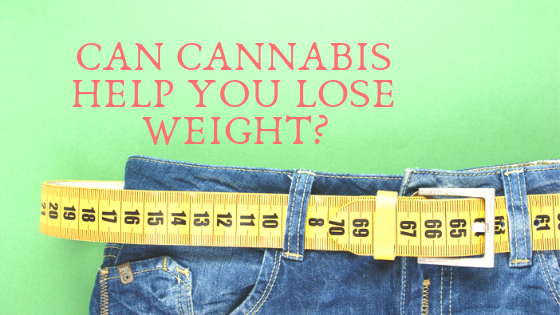
Cannabis and weight loss aren’t often mentioned in the same breath. After all, we’ve been conditioned to think there isn’t a correlation, especially because cannabis can cause the munchies, aka those intense, seemingly limitless cravings for the most delicious but least nutritious food. (Let’s be real, have you ever smoked a bowl and had an overwhelming urge to eat a...salad afterward? If you’re fried, then so is your dinner.)
Fine, maybe there’s no stoner diet to lose weight. However, a recent study found evidence that cannabis users put on less weight than those who didn’t use cannabis over a period of three years. This falls in line with previous research that yielded similar results, concluding that there is, in fact, a possible connection between cannabis usage and lower BMIs. There have also been findings on communication between the gut microbiome and the endocannabinoid system. However, whether weight loss (or less weight gain) is related to cannabis itself, or is simply due to an individual’s behavioral habits (perhaps they’re more aware of having the munchies, so they resist indulging?), is still uncertain, and more research is needed.
So what’s the best way to put a cannabis diet plan into place? There are a couple ways to go about it. If you’re one of the many people on the popular Keto diet, you can easily combine cannabis oil daily by adding it into your morning bulletproof coffee. It’s as simple as adding a couple of drops of cannabis oil, whether it’s CBD-only or it contains THC. This is because MCT oil, which is what people generally add to their fat-powered bulletproof coffee, is usually the base of CBD oils, so you can easily skip your regular MCT oil and substitute for CBD. Research has also shown MCT oil to help boost calorie-burning and weight loss. Another thing to note is that CBD does not have appetite-inducing effects, unlike THC its psychoactive cousin.
The cannabinoid THCV has the potential to lower appetite, which means if you look for cannabis strains with a high presence of THCV, chances are you’ll be safe from the munchies. Strains like Durban Poison and Jack the Ripper are both known to have high levels of THCV. You can also opt for a more balanced strain like ACDC, which has low levels of THC, but is high in CBD. The next time you’re at the nearest cannabis dispensary, talk to your budtender about these strains.
Whether or not your goal is to lose weight, incorporating cannabis into your diet can help you create an overall wellness plan. Further proof that the potential medicinal benefits of cannabis are vast!
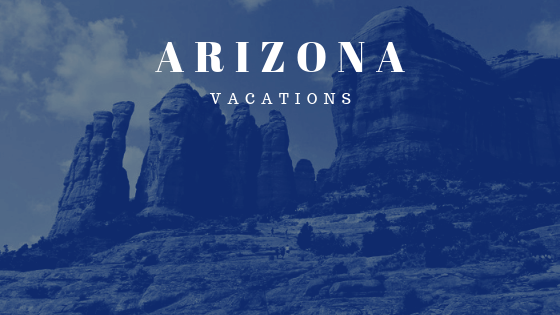
If you’re planning to visit Arizona, the Phoenix-Scottsdale area, also known as the Valley of the Sun, is not to be missed. Phoenix is the state’s capital, and it’s also the fifth-largest city in the United States. With plenty of relaxing, wellness-focused resorts, stunning nature views, and dining options galore, Arizona vacations are bound to be memorable. Even if you’re a local, these tips will have you falling in love with the Grand Canyon State all over again. If you’re lucky enough to be one of the Arizonians that have a medical marijuana card, you also have the added benefit of visiting one of three Cannabis dispensaries in Tempe Airport or central Scottsdale, near Scottsdale airport, or by the Tempe Airport. Ahead, the ultimate rundown of things to do in Arizona—places to stay, eat, see, and more.
Arizona Vacations
The Phoenician, a Luxury Collection Resort in Scottsdale Looking for Arizona’s ultimate relaxation sanctuary? This 250-acre resort features stunning views of Camelback Mountain. As part of a three-year renovation, the 60-room hotel built a 4,600 square foot fitness center, redesigned its pool area, and added a three-level spa with two dozen treatment rooms. Enjoy a relaxing facial or body treatment of your choice.
CIVANA If wellness and self improvement are your goals on this trip, consider staying at CIVANA. Located just outside of Scottsdale in the Sonoran Desert, CIVANA is the first sustainable wellness resort in the area and is focused on four key pillars: healthy cuisine, movement and fitness, spa’s healing arts, and discovery and enrichment. It offers up to 18 classes every day, each one centered around a topic on fitness, personal growth, or spirituality. There’s also a 22,000-square-foot spa and a restaurant that has a creative and healthy menu led by the renowned Chef Justin Macy.
Tratto Speaking of food, are your munchies giving you a craving for Italian? Book dinner at Tratto, a restaurant from beloved chef Chris Bianco, who is also famous for his pizza spot, Pizzeria Bianco (which is located right nearby Tratto, and considered to be one of the best restaurants in Arizona). At Tratto, all the pasta is made in-house, so you’re guaranteed to dig into fresh, authentic flavor no matter what you get—but the cacio e pepe is a known crowd-pleaser.
Tacos Chiwas This spot is vetted by the Mayor of Flavortown himself, Guy Fieri. Indeed, this Phoenix taco joint is not to be missed. It’s a labor of love, started by married couple Nadia Holguin and Armando Hernandez, who were both born in Chihuahua, Mexico (the restaurant is a homage to their hometown) and met in Arizona in 2012. Make sure to order the rajas gorditas, a star dish made with soft, pillowy pockets of tortilla, flavorful beans, and rajas, which are poblano chile strips with cheese. Drooling.
Taliesin West Are you an architecture geek or interior design nerd? Plan a day trip to Frank Lloyd Wright’s winter home, which was recently added to the Unesco World Heritage List. There are plenty of tours to choose from, but the Night Lights tour is perfect for a romantic desert night.
If you’re planning to visit Arizona, the Phoenix-Scottsdale area, also known as the Valley of the Sun, is not to be missed. Phoenix is the state’s capital, and it’s also the fifth-largest city in the United States. With plenty of relaxing, wellness-focused resorts, stunning nature views, and dining options galore, Arizona vacations are bound to be memorable. Even if you’re a local, these tips will have you falling in love with the Grand Canyon State all over again. If you’re lucky enough to be one of the Arizonians that have a medical marijuana card, you also have the added benefit of visiting one of three Cannabis dispensaries in Tempe Airport or central Scottsdale, near Scottsdale airport, or by the Tempe Airport. Ahead, the ultimate rundown of things to do in Arizona—places to stay, eat, see, and more.
Arizona Vacations
The Phoenician, a Luxury Collection Resort in Scottsdale Looking for Arizona’s ultimate relaxation sanctuary? This 250-acre resort features stunning views of Camelback Mountain. As part of a three-year renovation, the 60-room hotel built a 4,600 square foot fitness center, redesigned its pool area, and added a three-level spa with two dozen treatment rooms. Enjoy a relaxing facial or body treatment of your choice.
CIVANA If wellness and self improvement are your goals on this trip, consider staying at CIVANA. Located just outside of Scottsdale in the Sonoran Desert, CIVANA is the first sustainable wellness resort in the area and is focused on four key pillars: healthy cuisine, movement and fitness, spa’s healing arts, and discovery and enrichment. It offers up to 18 classes every day, each one centered around a topic on fitness, personal growth, or spirituality. There’s also a 22,000-square-foot spa and a restaurant that has a creative and healthy menu led by the renowned Chef Justin Macy.
Tratto Speaking of food, are your munchies giving you a craving for Italian? Book dinner at Tratto, a restaurant from beloved chef Chris Bianco, who is also famous for his pizza spot, Pizzeria Bianco (which is located right nearby Tratto, and considered to be one of the best restaurants in Arizona). At Tratto, all the pasta is made in-house, so you’re guaranteed to dig into fresh, authentic flavor no matter what you get—but the cacio e pepe is a known crowd-pleaser.
Tacos Chiwas This spot is vetted by the Mayor of Flavortown himself, Guy Fieri. Indeed, this Phoenix taco joint is not to be missed. It’s a labor of love, started by married couple Nadia Holguin and Armando Hernandez, who were both born in Chihuahua, Mexico (the restaurant is a homage to their hometown) and met in Arizona in 2012. Make sure to order the rajas gorditas, a star dish made with soft, pillowy pockets of tortilla, flavorful beans, and rajas, which are poblano chile strips with cheese. Drooling.
Taliesin West Are you an architecture geek or interior design nerd? Plan a day trip to Frank Lloyd Wright’s winter home, which was recently added to the Unesco World Heritage List. There are plenty of tours to choose from, but the Night Lights tour is perfect for a romantic desert night.
The following procedures apply to adults applying for cards in their home states. All applications require proof of identity and other supporting documents; see your state’s application for details. Some states require a criminal background check. Many states also offer programs for minors and out-of-state applicants, but procedures vary. Consult your state’s official guidance. The fees listed are state processing fees; visiting a certifying doctor will incur extra fees, not listed here. Some states offer reduced application fees in cases of financial hardship or for veterans and other populations; check your state’s official guidance for details. You will need a “bona fide” relationship with a physician. This may mean that you’ll have to see the physician several times over a specified period in order to qualify. Details are listed in state application procedures. Note that no doctor is ever required to approve you for medical marijuana, even if they’re authorized to issue marijuana recommendations.
Guide On How To Get A Medical Marijuana Card
ARIZONA Check the Arizona Department of Health Services forqualifying conditions. Visit a licensed physician—MD, doctor of osteopathy (DO), homeopath, or naturopath—for official certification; doctors do not need to be registered with a state marijuana program. File application and certification online. $150 fee.
ARKANSAS Check the Arkansas Department of Health for qualifying conditions and to download an application or apply online. For written certification, visit a licensed MD or DO with a controlled substances license from the DEA. Mail your certification, completed application, and $50 fee to the Arkansas Department of Health.
CONNECTICUT Check Connecticut’s state website for qualifying conditions. Visit a licensed MD for official certification; the MD does not have to be registered with a state marijuana program. The physician will register you with Connecticut’s medical marijuana program, giving the department your email address and phone number. When contacted, you will supply identifying information and pay the $100 fee.
DELAWARE Check the Delaware Division of Public Health website for qualifying conditions. Visit an MD or DO for official certification; the physician does not have to be registered with a state marijuana program. File certification and identifying documents by submitting online or by downloading and printing an application and mailing to the Delaware Division of Public Health, at the address on the form. $125 fee.
FLORIDA Check the Florida statute for qualifying conditions and the Office of Medical Marijuana Use for state-approved physicians. Visit a physician; if they recommend marijuana for you, they will register you on the Florida Medical Marijuana Use Registry and give you a patient ID number, which you will use to apply for an ID card online. $75 fee.
HAWAII Check Hawaii’s Department of Health website for qualifying conditions. For written certification, visit a physician or advanced practice registered nurse (APRN) licensed to prescribe controlled substances. Create an online account with the medical marijuana program, then follow the steps to file your application and certification online. $38.50 fee.
ILLINOIS Check the Illinois Department of Public Health site for qualifying conditions. Visit a physician for certification; the physician does not need to be registered with a state marijuana program. If the physician recommends marijuana for you, they will send written certification to the Illinois Department of Public Health. Next, complete a paper application and mail in, or register online. $100 fee.
LOUISIANA Check the Louisiana Department of Health site forqualifying conditionsanddoctors authorized to prescribe cannabis. To qualify, visit an authorized doctor to discuss your condition; on recommendation, they will enter you in the state registry. This qualifies you to buy at an authorized pharmacy; no card is needed. Note: as of this writing, there are no authorized pharmacies, with the first scheduled to open in May 2019.
MARYLAND Visit Maryland’s Medical Marijuana Commission site forqualifying conditionsand toregister as a patient. When you have your ID number, visit aregistered health provider. If the physician issues you a medical marijuana recommendation, they will file your certification online, and you’ll receive your ID card. $50 fee.
MICHIGAN Check the Michigan Department of Licensing and Regulatory Affairs for qualifying conditions. Visit any licensed MD or DO for certification. Paper applications: download a form and mail, with physician recommendation, to the Michigan Medical Marijuana Program. Online applications: your certifying doctor will need to be registered with the marijuana program, and will receive an email asking for approval once you’ve completed the form. For paper and online applications: $60 fee.
MINNESOTA Check the Minnesota Department of Health site for qualifying conditions. Visit an MD, DO, APRN, or physician’s assistant (PA) for certification; they do not need to be registered with a state marijuana program. If the doctor recommends you for medical marijuana, they will register you on the state’s online registry. The Department of Health will email you application instructions. If approved, you must visit a cannabis patient center and consult with a pharmacist before buying cannabis. Note that medical marijuana users in Minnesota are not allowed to smoke flower. $200 application fee.
MISSOURI Applications open July 4, 2019. Check the Missouri Department of Health and Senior Services for qualifying conditions. Visit a physician for certification; the physician does not need to be registered with a state marijuana program. Apply for an ID card, applications will open on June 4; fee details were not available at time of writing.
MONTANA Check the Montana Department of Public Health and Human Services to download a physician certification form, which lists qualifying conditions. Visit an MD or DO to complete the form; the physician does not need to be registered with a state marijuana program. File application online, including physician statement. $30 fee.
NEW HAMPSHIRE Check the New Hampshire Department of Health and Human Services (DHHS) site for qualifying conditions. Visit a physician or APRN for certification; they do not need to be registered with a state marijuana program. Fill out an application from DHHS and mail to the address on form with your medical certification. $50 fee.
NEW MEXICO Go to the New Mexico Department of Health site for an application, which lists qualifying conditions. Visit a medical practitioner with prescribing authority; they do not have to be registered with a state marijuana program. Complete an application and mail to the address on the application, with your medical certification. No fee.
NORTH DAKOTA Check the North Dakota Department of Health site for qualifying conditions. Visit an MD, DO, or APRN for a written certification; medical professionals do not need to be registered in a state program. Apply online, submitting your written certification. $50 fee.
OKLAHOMA Download a physician certification form from the Oklahoma Medical Marijuana Authority site. Visit an MD or DO for written certification; the physician does not need to be registered in a state marijuana program. There is no list of qualifying conditions for medical marijuana; approvals are at the doctor’s discretion. Submit the form, certification, and $100 fee online.
RHODE ISLAND Check the Rhode Island Department of Health site for qualifying conditions and a physician form. Visit a physician for written certification; physicians do not need to be registered in a state marijuana program. Download an application and send, with physician certification, to the address on the form. $50 fee.
UTAH Utah lawmakers passed a medical marijuana bill in late 2018. There are currently no legally authorized cannabis dispensaries in the state. The process for obtaining a medical marijuana card is due to be in place by March 2020. Check the Utah Department of Health site for updates and qualifying conditions.
VIRGINIA Visit a doctor registered with the Board of Pharmacy for certification. There’s no state-issued list of qualifying conditions; approval is at physicians’ discretion. Apply online through the Department of Health Professions, submitting your physician approval. $50 fee.
WEST VIRGINIA West Virginia passed its Medical Cannabis Act in April 2017, but the program is still in early development, and the process for obtaining a medical marijuana card isn’t yet established. Check the Department of Health and Human Resources’ medical marijuana site for updates and qualifying conditions.
Fall. It’s one of our favorite seasons here at MedMen—and it’s not just because of the cozy weather, its proximity to the holiday season, or the tasty flavors and treats associated with the weather. Sure, we love all of that, but we have a secret we’re willing to let you in on fall is one of the best times to head to the one and only Las Vegas.
Pool party season comes to an end by mid-October, which means the beginning of fall is the optimal time to get in your last few moments surrounded by friends, thrilling music, and a pool of course. And let’s get real: do you ever really need a reason to go to Vegas?
Just in case you do, we’ve got a few reasons why you may head to the city. Maybe you need a break from school, want a fun weekend getaway for a post-summer celebration, or just want to explore the city—whatever the reason that brings you to Vegas, one thing is for sure: MedMen should be at the top of your list.
Partying not your thing? A weekend away is an awesome opportunity to take a pause, get a refresh, and even reflect on 2018. Just because Vegas is the bright and flashy city doesn’t mean it cannot be full of self-reflection. Chill pool time or a spa moment? Count us in.
Regardless of what brings you to the city, we’re going to assume that upon arrival you may be looking for a cannabis dispensary near Las Vegas. We’ve got you. Our two locations boast a plethora of products that will get you in the mood to party, chill, or simply take in the scenery.
If you’re a local, then the Las Vegas Strip may not be your scene. Instead, you’ve got some fall activities within the desert of Vegas. From football games and fresh priorities that the new school year brings to goal-centric refreshes and seasonal parties, heading to a in Las Vegas is a sure way to feel geared up, relaxed, and ready to tackle the fall season.
So now we get into some of our favorite products that we keep in stock at our Las Vegas cannabis shops. CBD products offer up the perfect way to chill out and get a fresh perspective on things. The Select Grapefruit vape pen brings out the best of CBD with a fruity flavor. Not into the vape life? Altus Mango Gummies have a 20:1 CBD ratio that also brings a fun fruity flavor with a tasty twist.
For those looking to get on the high side, we love Vert’s Choco Chip Brownie Cookies, Shango’s Assorted Mini Gummies, and the Raspberry Fruit Chews from Qualcan—all of which come in the hybrid variety. Have a gummy, a bite or two of some brownies, or a delicious fruit chew before a night out on the town or even a quiet night at home preparing for the seasonal refresh—the beauty of cannabis is the versatility and ability to enjoy it across any activity and we’re certain any fall moment is one made for weed.
Whether you’re in Vegas or beyond, here’s to an awesome fall!

 cannabis info